Eyes of the Forest
Team: 26 developers | Genre: | Engine: Unreal 5.4.4. | Role: Level Designer | Duration: Aug ‘24 - April ‘26'
Overview:
Eyes of the Forest is narrative-focused stealth thriller in which survival depends on patience, observation, and restraint. Players explore a fantastical environment where every movement matters and safety is never guaranteed.
My Role:
I served as a level designer from pre-production to full release, designing the playable space of the first half of the game, the first two encounters, and providing support to other areas of the level. I initially worked alongside one other level designer before forming a strike team of four after the first year of development.
I focused primarily on strong compositions and visually impactful areas, crafting the most artfully engaging play space possible.
Project Summary:
Planned and implemented levels from pre-production, to greybox layouts, to setdress pass.
Coordinated with programmers to implement a level streaming system to enhance performance.
Worked closely with environment artists to ensure a smooth level pipeline and maintain a clear vision for the game space.
Pre-Production
I collaborated with the other level designer to develop a series of mini-levels during pre-production. These prototypes allowed us to test the game’s feel and visual direction before the core mechanics were fully implemented.
Since the project relies heavily on immersion and game feel for engagement, establishing the visual and structural language early on was essential.
𓂃↟˖˳· ִֶָ ↟˳❀˳↟ ִֶֶָ ·˳˖↟𓂃
· · ──── · · ──── · · ──── · · ──── · · ──── · ·
Mini-level composed shot sketches and blockouts
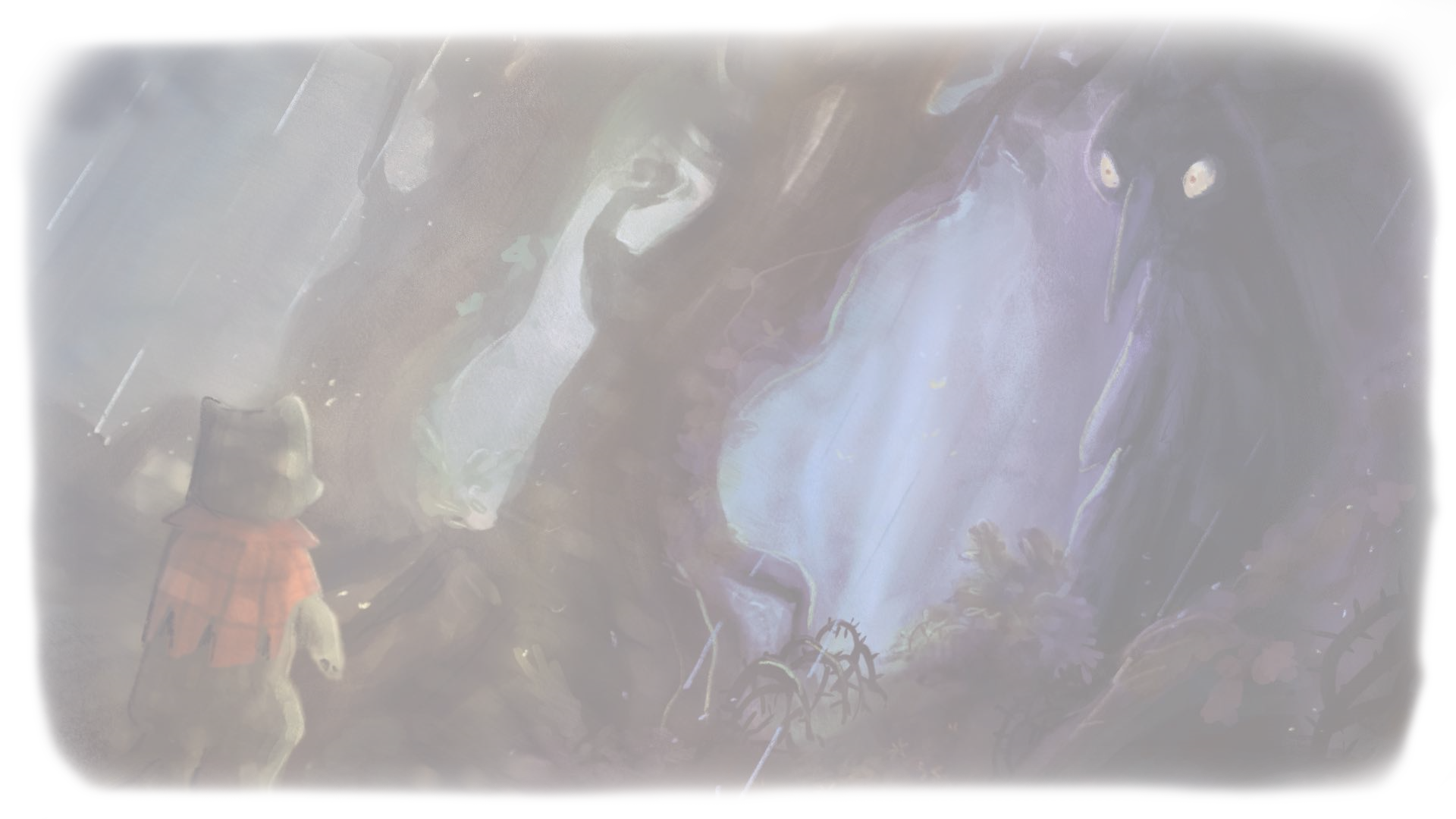
Here are two scenes I composed: a stealth encounter and a safe area. In both, I experimented with scale to reinforce the player fantasy of being a small, vulnerable mouse, aligning with our design pillar: “You are a small, vulnerable creature.”
These micro-levels helped me understand the kind of world I’d be working in for the next few years, ensuring I’d have a stronger toolbox when full production ensued.
While I focused heavily on the composed scenes for mood, it was still important to consider the level's overall structure so the compositions would feel properly paced in the experience.
𓂃↟˖˳· ִֶָ ↟˳❀˳↟ ִֶֶָ ·˳˖↟𓂃
· · ──── · · ──── · · ──── · · ──── · · ──── · ·
In late pre-production, we ultimately decided to center the game around an NPC mentor companion (“buddy system”) and a spotlight-based stealth system for our main mechanics. With limited resources for complex enemy AI or animations, the spotlight became our primary hazard.
𓂃↟˖˳· ִֶָ ↟˳❀˳↟ ִֶֶָ ·˳˖↟𓂃
Sketches and engagement graph for pre-pro proof of concept
𓂃↟˖˳· ִֶָ ↟˳❀˳↟ ִֶֶָ ·˳˖↟𓂃
Because the spotlight served as the primary hazard, my design prioritized timing, player pacing, and clear sightlines. I designed spaces that encouraged a steady rhythm of movement and clarity with these elements:
Players should rarely remain stationary for long, but also should not be forced into constant movement.
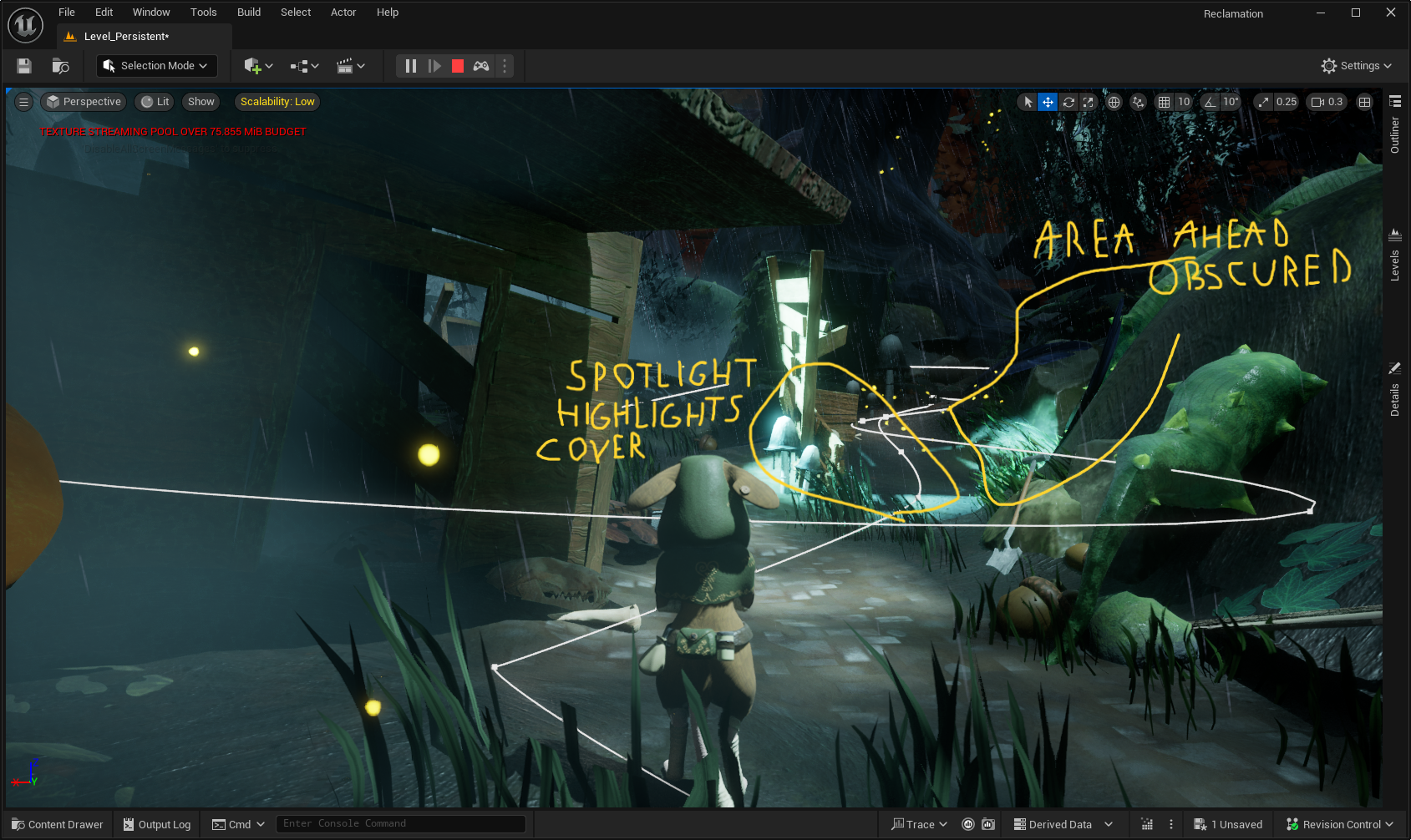
Cover elements protect players from the moving spotlight while maintaining necessary visibility of the environment.
Layouts were carefully staged so players could track the spotlight’s movement and plan their next move.
This approach ensured the stealth mechanic remained readable while maintaining tension and forward momentum.
𓂃↟˖˳· ִֶָ ↟˳❀˳↟ ִֶֶָ ·˳˖↟𓂃
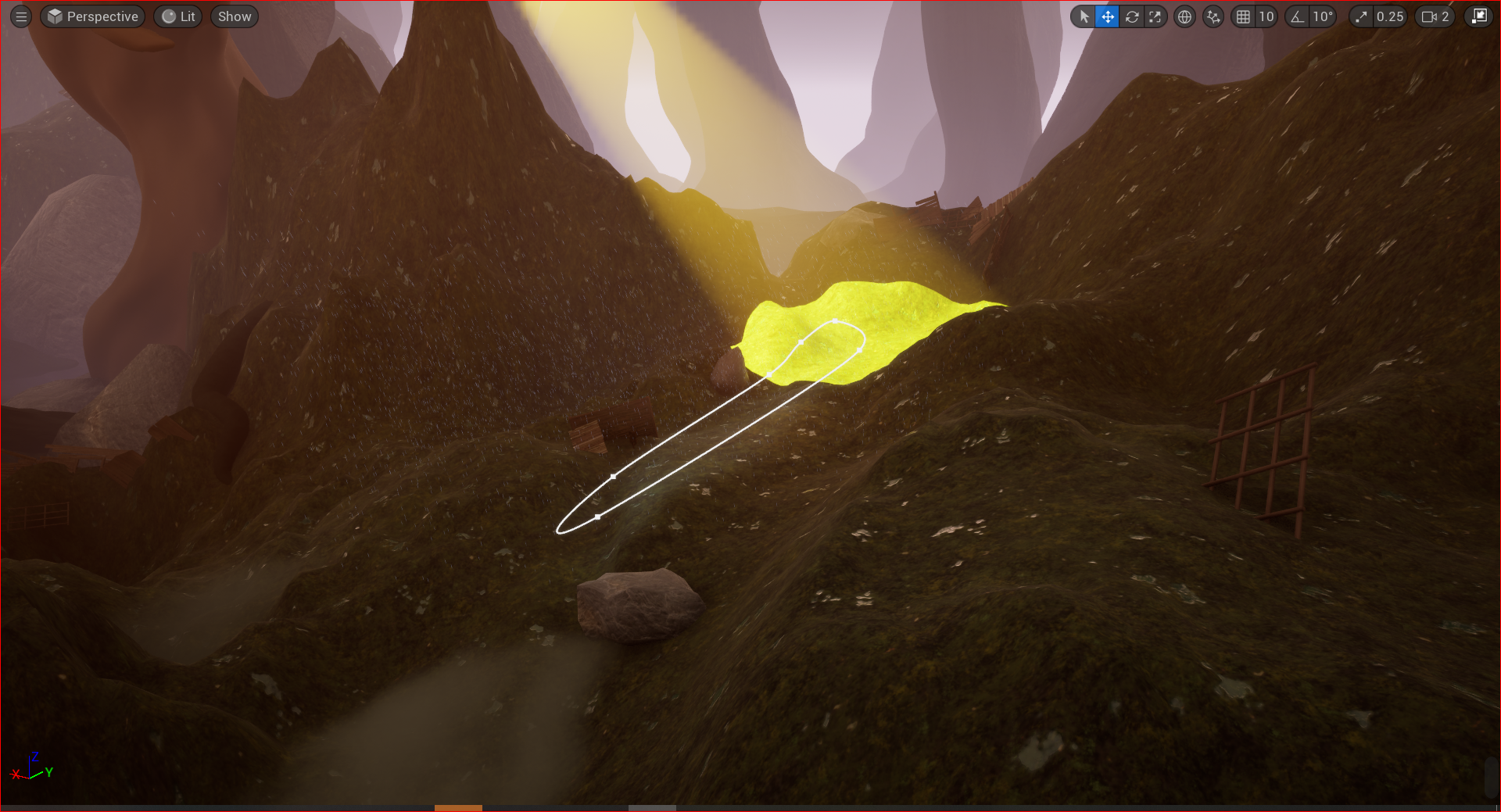
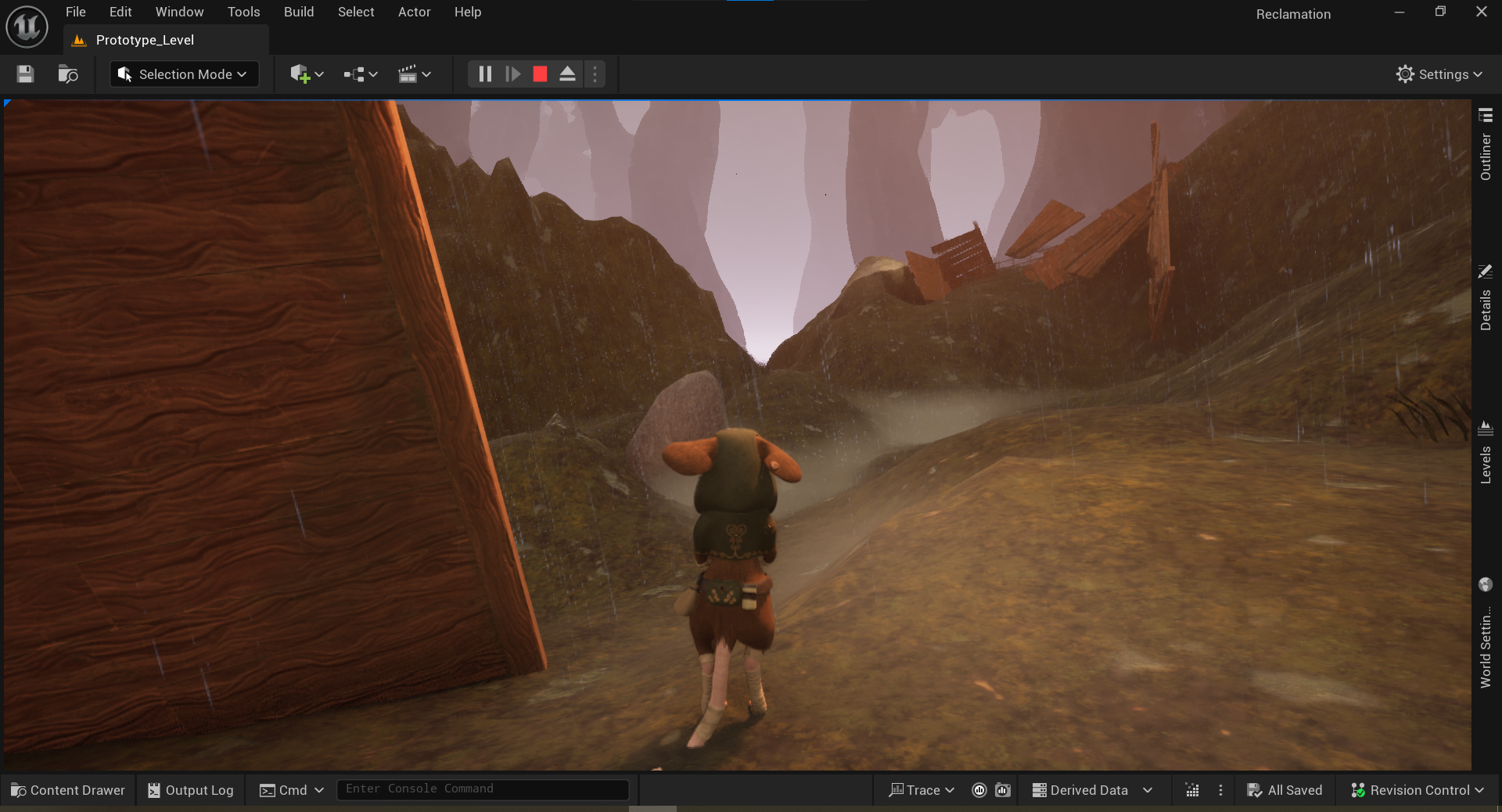
Progress captures of the proof-of-concept encounter
Full Production
new constraints and new process
As the project prioritized immersion and existed in a fully natural environment, it was decided we’d aim to have no loading screens, requiring seamless traversal while maintaining performance. This created constant tension between visual fidelity, scale, and technical constraints.
As such, I needed to come up with many tricks to keep the level space tight and performance-friendly, while still being rich and believable.
· · ──── · · ──── · · ──── · · ──── · · ──── · ·
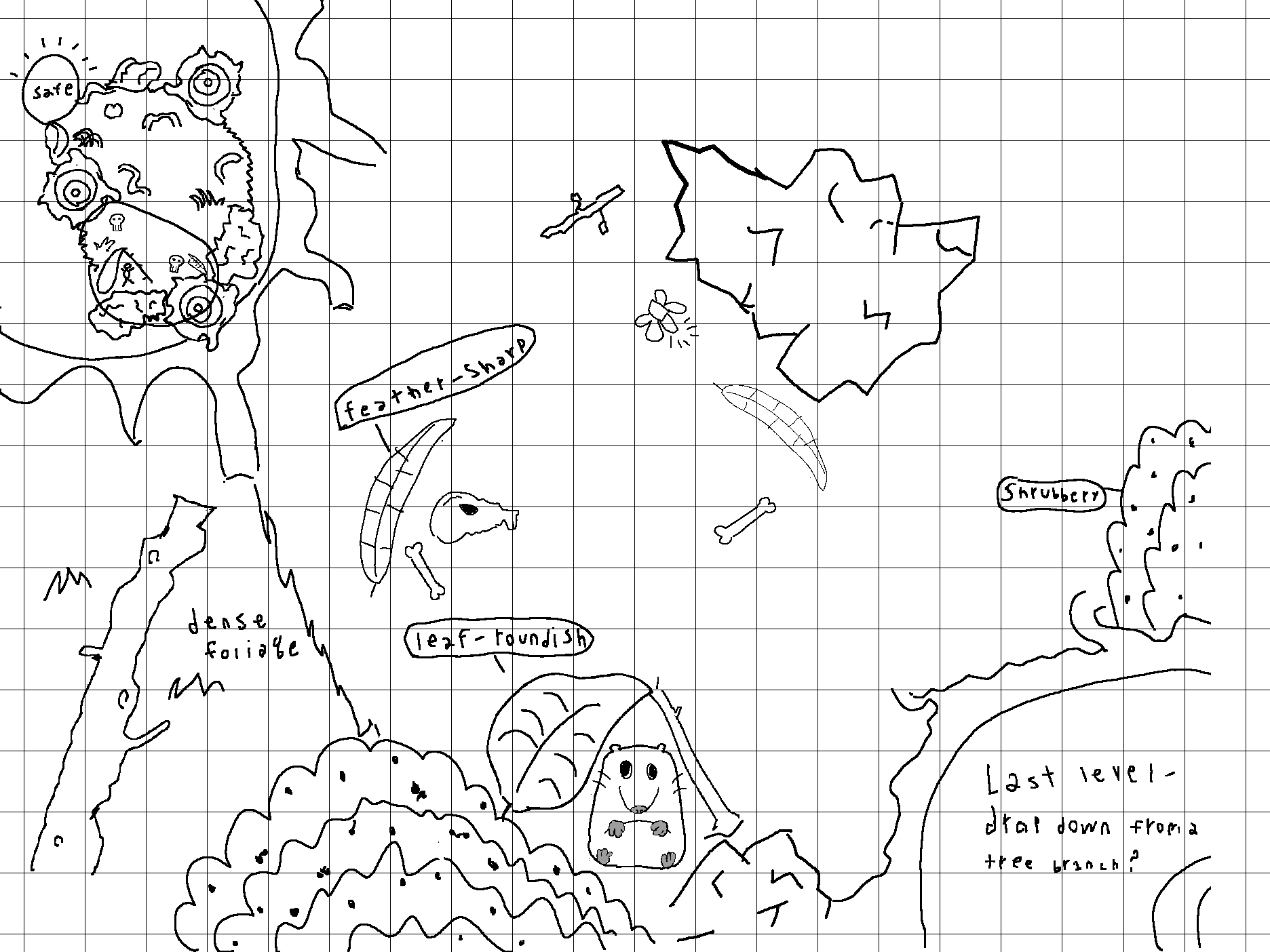
Topdown maps of the level scenes with symbol legend for reference
Shots from scene 4, the narratively significant artifact house, and scene 9, the second stealth encounter
· · ──── · · ──── · · ──── · · ──── · · ──── · ·
Adaptation to Constraints
Formerly, I’d mainly worked on artificial, non-organic environments, with lots of sharp angles and flat, linear spaces. However, this project required a shift toward more organic spaces, so I emphasized winding paths, vertically traversal, and dense natural occlusion to manage both navigation and performance.
𓂃↟˖˳· ִֶָ ↟˳❀˳↟ ִֶֶָ ·˳˖↟𓂃
𓂃↟˖˳· ִֶָ ↟˳❀˳↟ ִֶֶָ ·˳˖↟𓂃
𓂃↟˖˳· ִֶָ ↟˳❀˳↟ ִֶֶָ ·˳˖↟𓂃
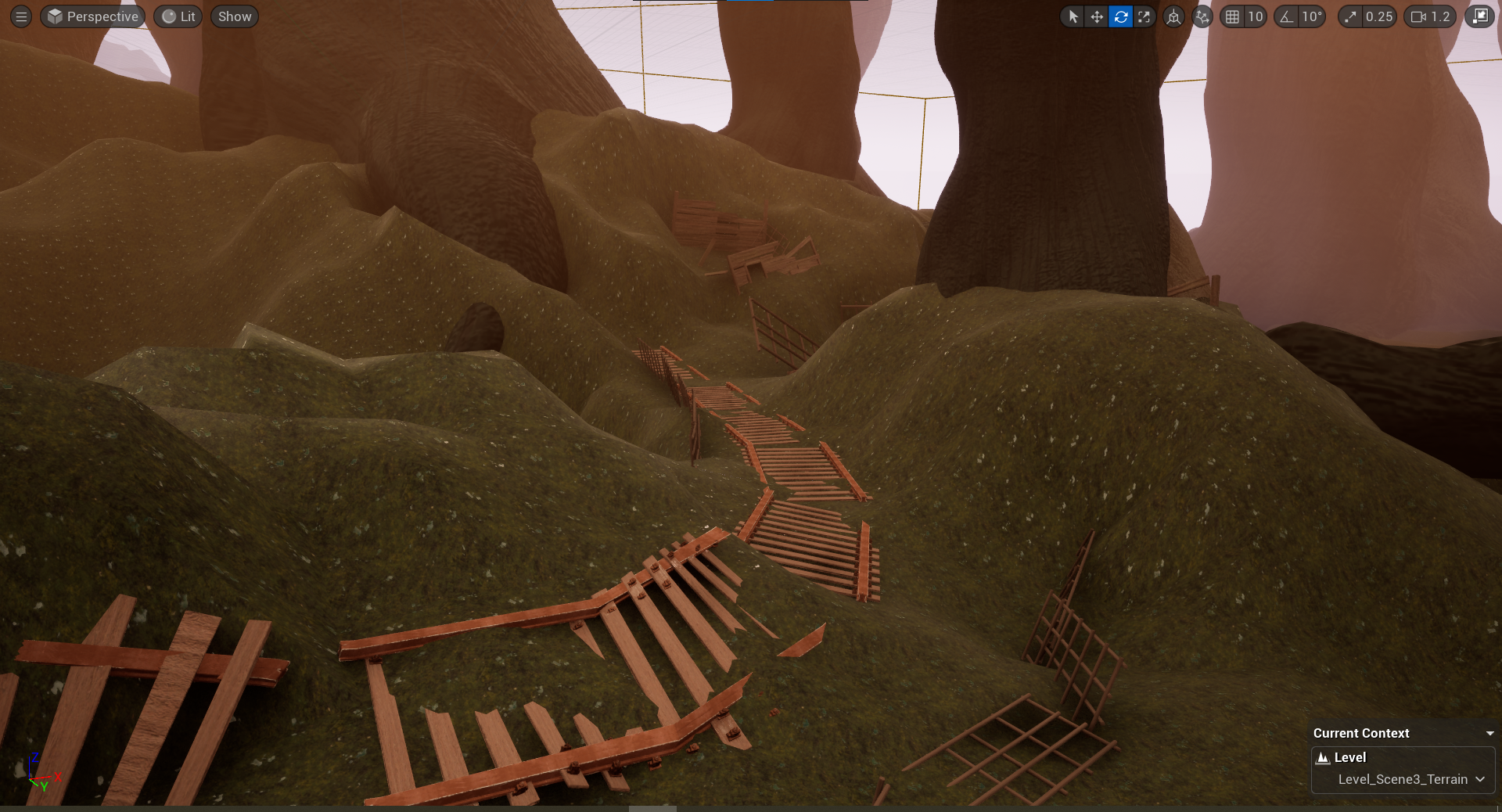
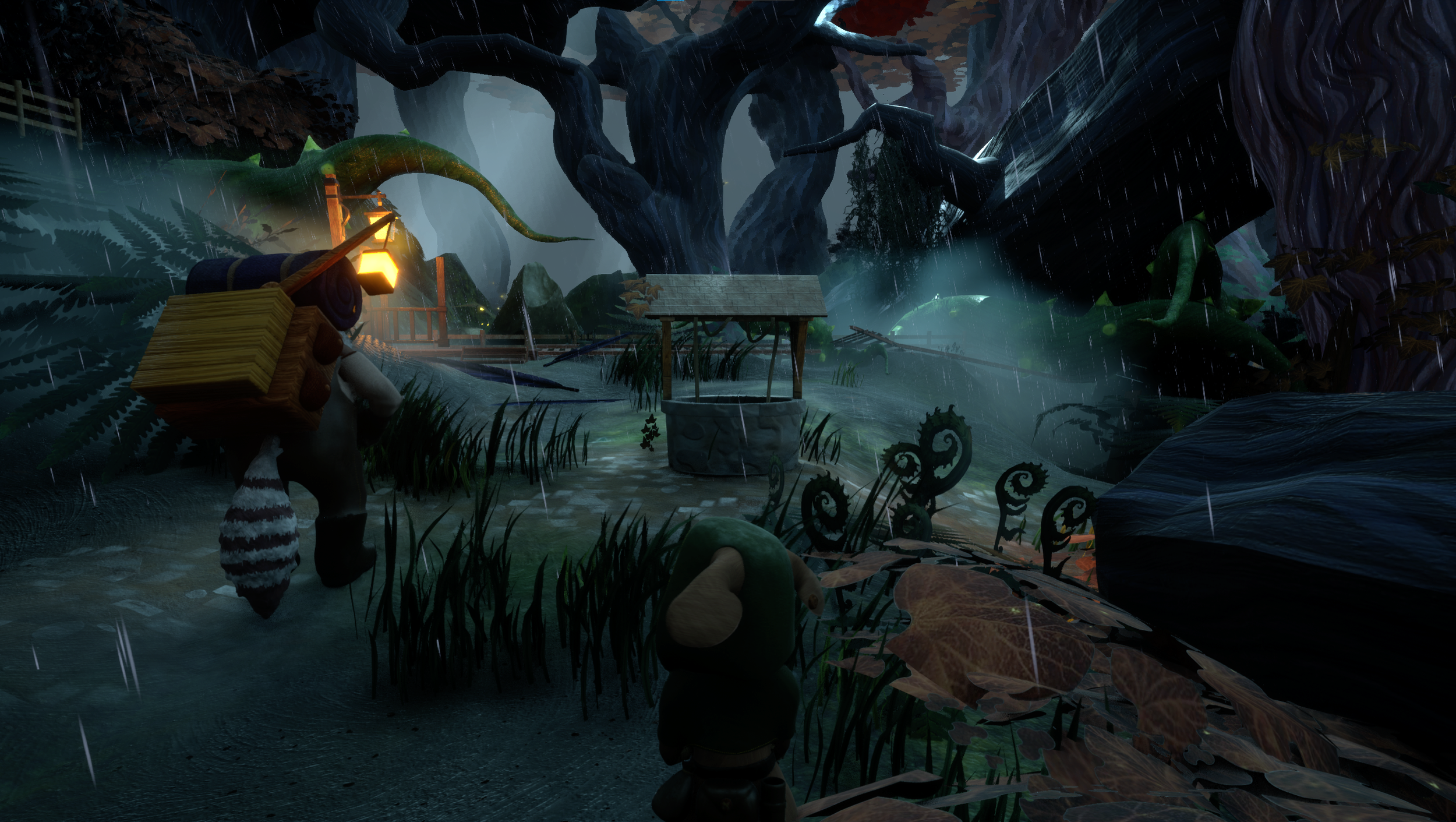
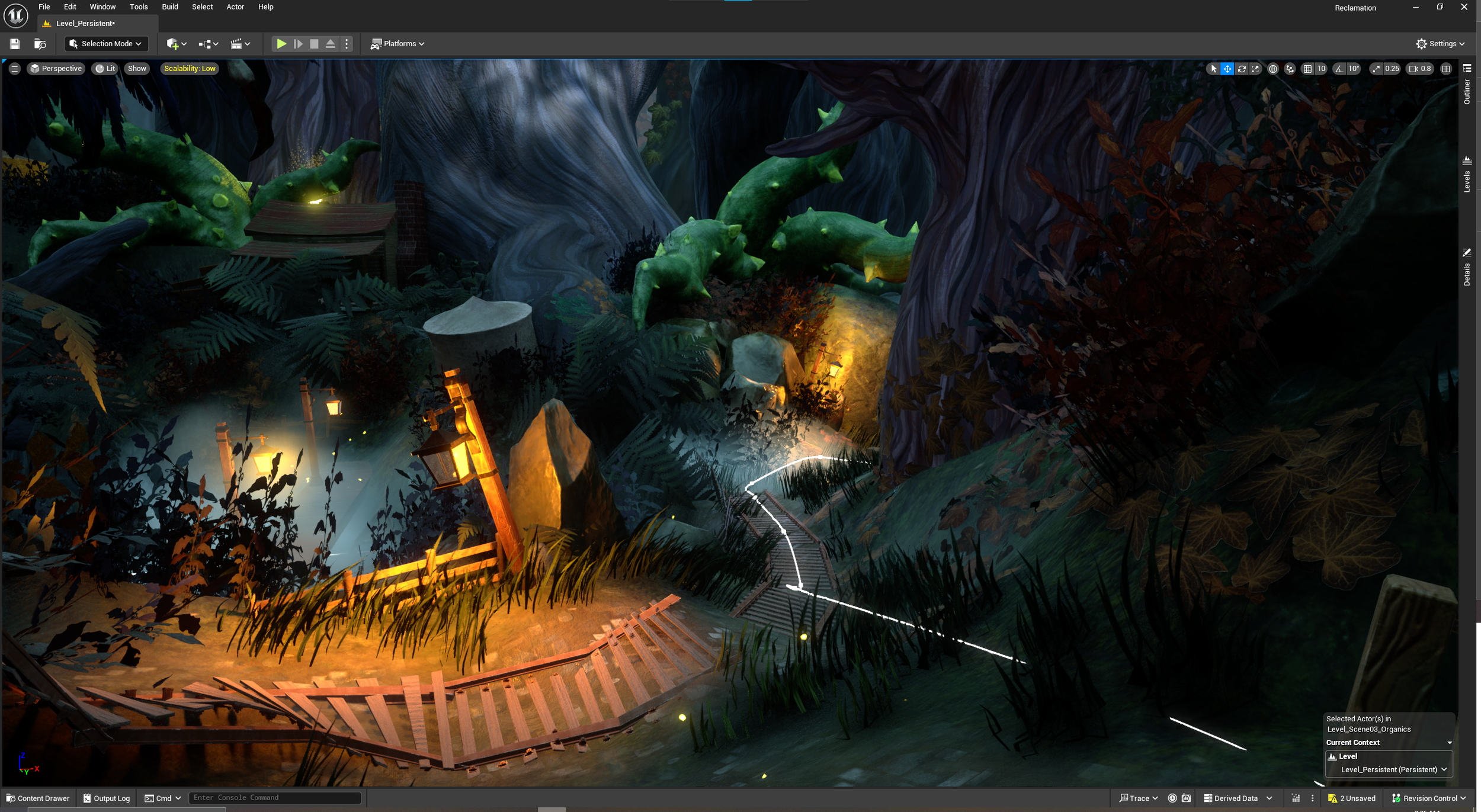
The ruined village was a key challenge, as it needed to feel open and intentional while staying within budget. I concentrated gameplay in the town square and introduced a constrained side path along the railroad, allowing players to experience the core of the space while suggesting a larger, explorable world beyond it.
𓂃↟˖˳· ִֶָ ↟˳❀˳↟ ִֶֶָ ·˳˖↟𓂃
To support level streaming, we structured the experience into a sequence of distinct “scenes,” each with clear roles in the game’s progression. I owned Scenes 1–9 (the first half of the game), including the movement tutorial, ruined village, desolate swamp, and early encounters.
First blockout of the railroad section vs the final version
𓂃↟˖˳· ִֶָ ↟˳❀˳↟ ִֶֶָ ·˳˖↟𓂃
To further support the performance need, I helped design and implement a pseudo-spiral layout for the world that guided players downward throughout the game. This reduced visible space at any given time, improving streaming reliability while preserving a sense of continuous exploration.
Rather than relying on large playable areas, I focused on shaping player perception—using terrain, foliage, and structures to control sightlines and imply scale without the cost of rendering it.
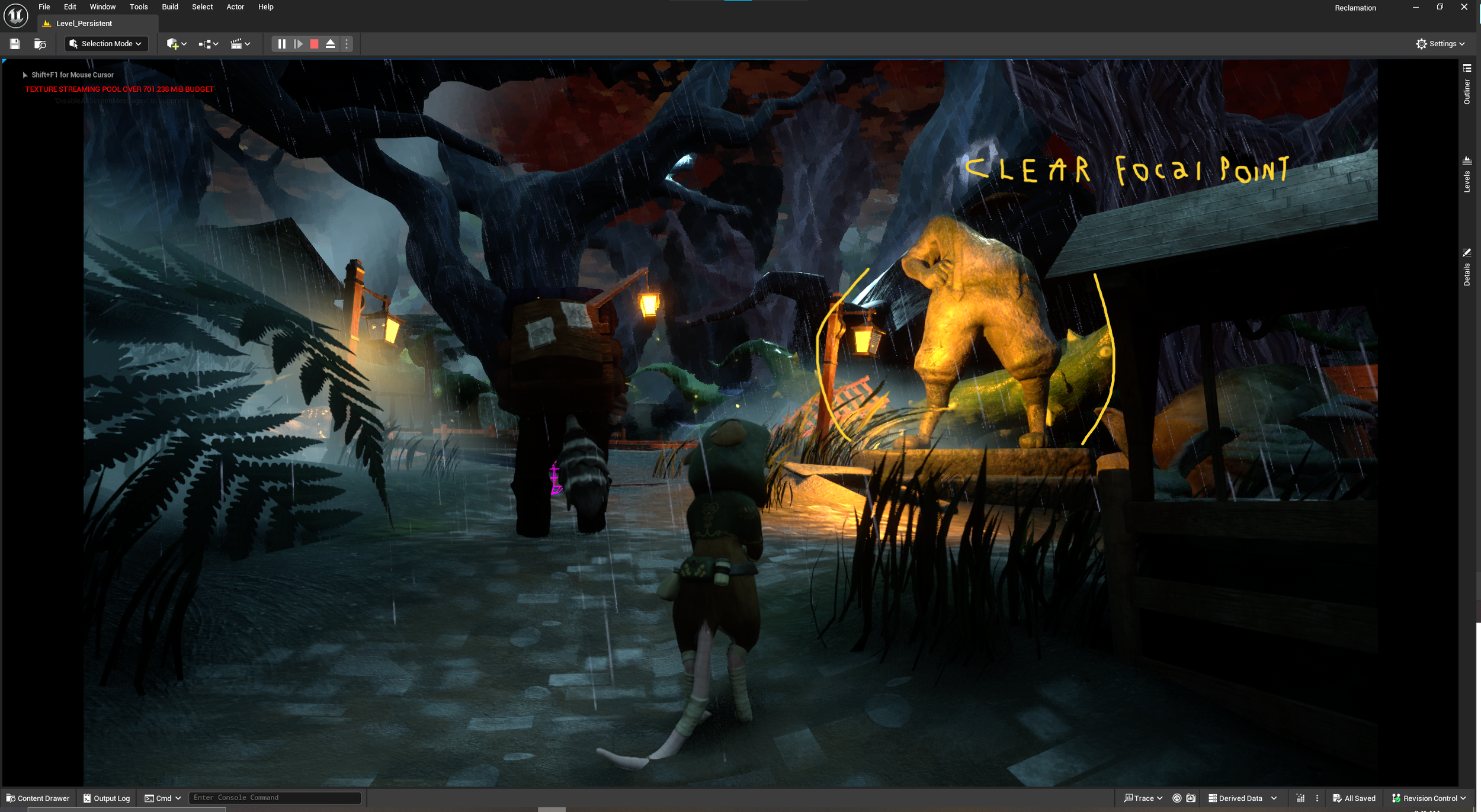
The town square midway through project vs the latest iteration — the statue focal point was a ideated and added fairly late into development
𓂃↟ Impact ↟𓂃
Enabled seamless traversal with no loading interruptions
Improved performance through controlled visibility and streaming-aware layouts
Delivered varied, readable spaces while maintaining a cohesive world structure
Early topdowns of the village - with the 2nd draft, the path became more winding and a focal was added for storytelling and visual interest
· · ──── · · ──── · · ──── · · ──── · · ──── · ·
Project Case Study
↟ ↟ Tutorial Encounter ↟ ↟
Mechanics, friction, and how no one ever looks up
Early draft concepts. Ironically, the final level ended up more like the first draft than the final draft
Another major issue that quickly became apparent were the sightlines—at the time, I hadn’t much experience with designing open 3D environments, mostly small-scale interior spaces for encounters.
When blocking out the encounter, I had to quickly learn just how important using leading lines and 3D presentation were. My compositions were too messy, and the messy terrain sculpting led to cover being misread.
These mistakes with the early blockouts all led to a major problem that I iterated on for weeks.
· · ──── · · ──── · · ──── · · ──── · · ──── · ·
𓂃↟˖˳· ִֶָ ↟˳❀˳↟ ִֶֶָ ·˳˖↟𓂃
Being responsible for the first half of the game, I owned the game’s first encounter, and designed it to teach the core stealth mechanics while minimizing friction for the player.
As this scene set the tone for the entire experience—early frustration would risk player drop-off. Of course, in a game where getting players to look up is integral, there are going to be some issues to solve.
𓂃↟˖˳· ִֶָ ↟˳❀˳↟ ִֶֶָ ·˳˖↟𓂃
I tried to emphasize careful movement and use of each core movement tool, but this quickly led to over-designing small gameplay atoms as well as feature bloat.
Where the encounter needed to be slower to teach the stealth mechanics, highlighting sprinting ended up breaking any sense of pacing, and climbing walls were too much to think about while remaining unseen.
The first draft of the encounter in-engine. Flat topdowns didn’t translate well without consideration for 3D
· · ──── · · ──── · · ──── · · ──── · · ──── · ·
Final draft concept—unnecessary elements were cut all around to simplify the learning curve
𓂃↟˖˳· ִֶָ ↟˳❀˳↟ ִֶֶָ ·˳˖↟𓂃
𓂃↟ The Big Problem ↟𓂃
Players died early and disengaged
Initial compositions over-prioritized cover. Players didn’t register the monster as a threat, thus not using the cover presented; they’d rush forward and encounter the monster too late. This led to panic, confusion, and repeated early deaths without proper feedback.
My solutions to this were to make the monster unmissable and to guide behavior through environment, not instruction.
𓂃↟˖˳· ִֶָ ↟˳❀˳↟ ִֶֶָ ·˳˖↟𓂃
Make the monster unmissable
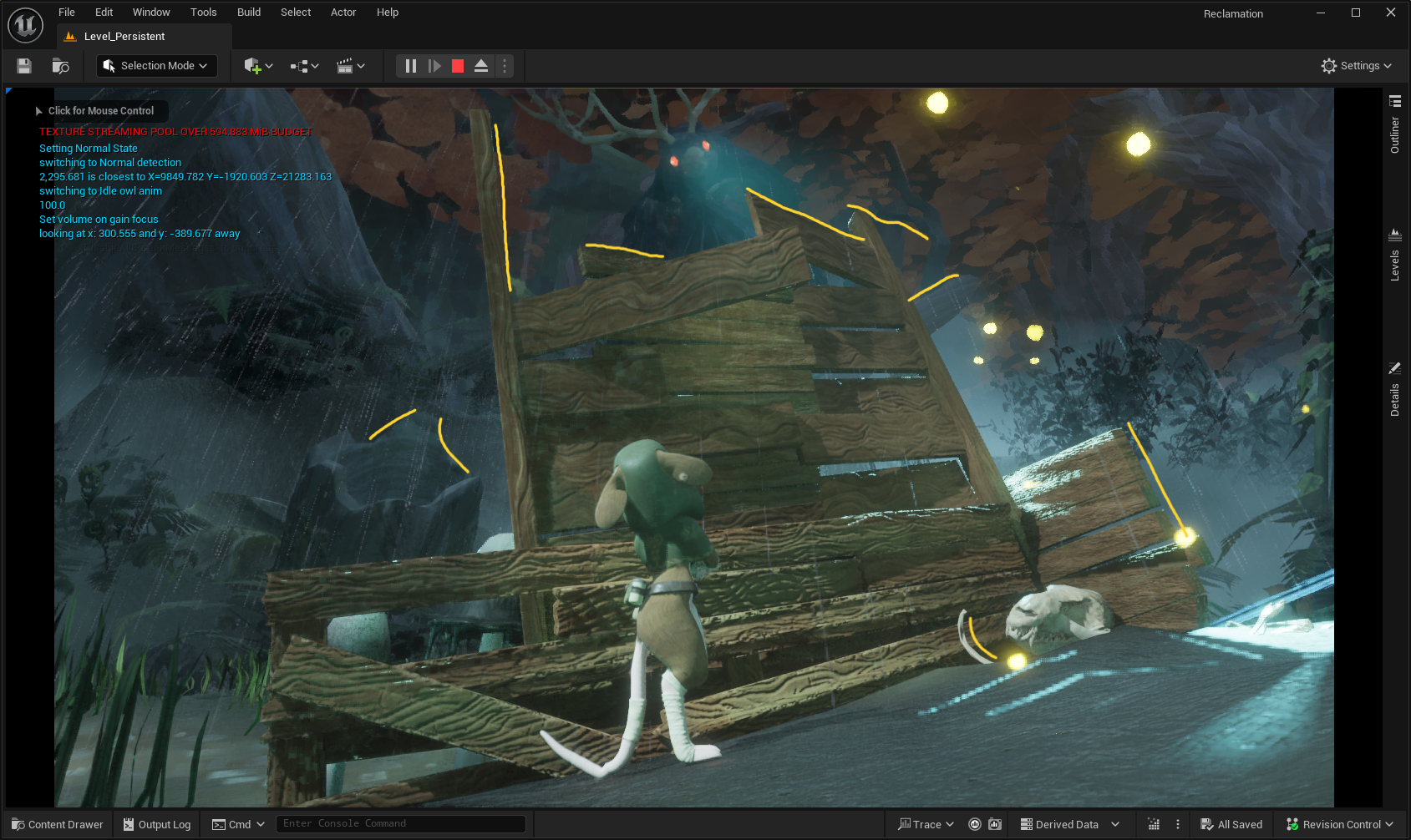
First, I recomposed the encounter to prioritize visibility of the monster from the entrance and across multiple points inside the area. If players missed the first read, subsequent compositions reinforced it.
This also had the added benefit of slowing the player down. They’d often pause in cover spots to get a better look at the owl before moving on, thus learning the stealth mechanics at a slower pace.
Guide behavior through environment
Since the mentor NPC wasn’t reliably instructing players to hide, I shifted to environmental design.
I removed an easily missed early cover point and promoted a more visible one as the first safe space, framing it alongside the monster. I then aligned sightlines between cover points to naturally guide players forward while obscuring the next.
Previously, players would see the exit and rush toward it; now, they progressed safely from cover to cover as intended.
𓂃↟˖˳· ִֶָ ↟˳❀˳↟ ִֶֶָ ·˳˖↟𓂃
Results
Where before death and confusion were frequent, now players identified the danger earlier, used cover as intended, and successfully navigated the encounter with fewer deaths and less confusion, thus being set up for success in later encounters.
· · ──── · · ──── · · ──── · · ──── · · ──── · ·
𓂃↟˖˳· ִֶָ ↟˳❀˳↟ ִֶֶָ ·˳˖↟𓂃